WHAT IS IT?
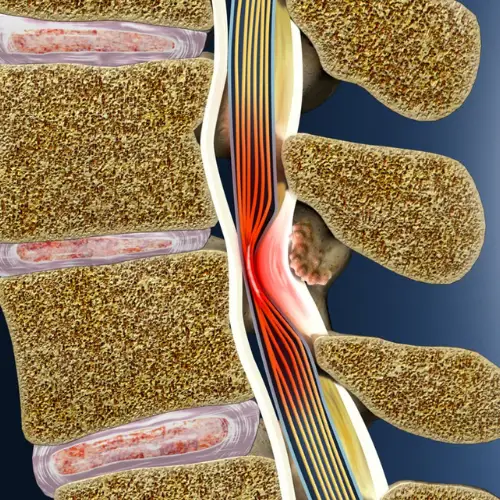
A block that is performed to determine if a specific spinal nerve root is the source of pain and reduce inflammation around the nerve root (usually from a herniated disc at this level) thus decreasing or relieving the pain.
HOW IS IT DONE?
The patient is given a local anesthetic - the physician then locates, under fluoroscopy, a specific spinal nerve root. A needle is introduced through the skin into the area adjacent to the nerve root. Dye is injected to confirm proper placement. Medication (anesthetic then steroid) is then injected into the area bathing the nerve root.
EXPECTED RESULTS:
Relief of back and leg pain.
HOW LONG DOES IT TAKE?
Fifteen to twenty minutes. Plus recovery time.
FACET JOINT SYNDROME (Definition):
Perhaps for me this is the simplest problem to treat, but hardest to explain. Even to doctors!!! The problem is that it was not understood until the late 1980s that the nerves to the Facet Joints could cause severe and diffuse pain. The pain does not follow a nerve root. It is actually referred pain, as the brain has trouble localizing these internal structures.
Consider the case of the man who has a heart attack and presents with pain under his left side of his breast bone, piece of cake. Another man may have a heart attack and present with pain in the left arm, jaw or even stomach or gall bladder area. The problem is that pain is interpreted differentially in different individuals.
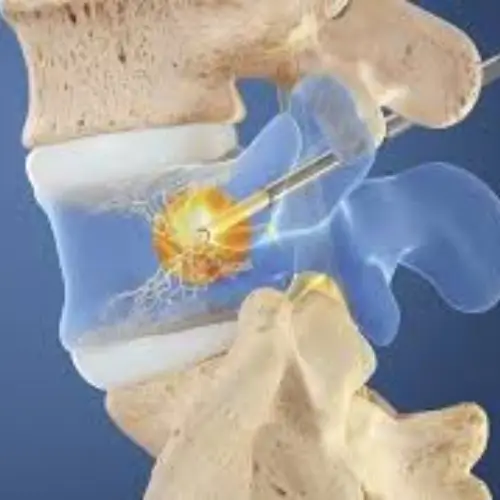
It is usually caused by trauma (auto accidents, whiplash, a bad fall) or a degenerated or herniated disc. These all cause the spine to sub-lux (move out of joint) and the joint capsule is ripped.
It is usually worsened by sudden movements or prolonged episodes of poor posture, (e.g. kneeling in the garden, bending over to lift or straining to read a book or a computer terminal). Many patients find the worst time is at night, when all the muscles relax and the joints grind together.
It is typically mistaken for fibromyalgia or myo-fascial syndrome. Both of these are garbage or waste basket terms. |